
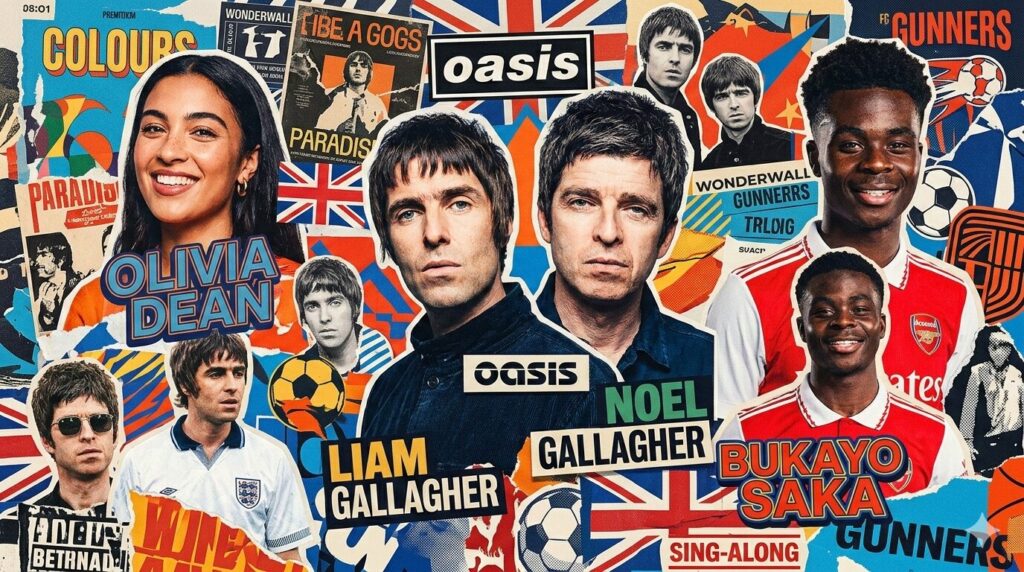
A look at the British stars dominating headlines, charts, and cultural conversation as we move through early 2026.
It’s barely March and already 2026 feels like one of those years British pop culture will look back on with a strange fondness. The kind of year where long-simmering talent finally gets its flowers, old feuds dissolve into sold-out stadiums, and the national conversation keeps circling back to a handful of names that seem to define the moment. Some of these names you’ve been hearing for years. Others might still feel relatively fresh. But collectively, they’re shaping what it means to be a UK celebrity right now — not just famous, but genuinely relevant.
I’ve been following British entertainment culture closely for over a decade, and what strikes me about this particular stretch is how organic it feels. There’s no single manufactured narrative driving things. Instead, you’ve got a singer-songwriter from South London winning armfuls of BRITs, two feuding brothers making peace on a scale nobody truly believed would happen, and a handful of actors, athletes, and creators carving out influence in ways that reflect where British culture is actually heading. Let me walk through it.
Olivia Dean: The BRIT Awards’ Defining Moment
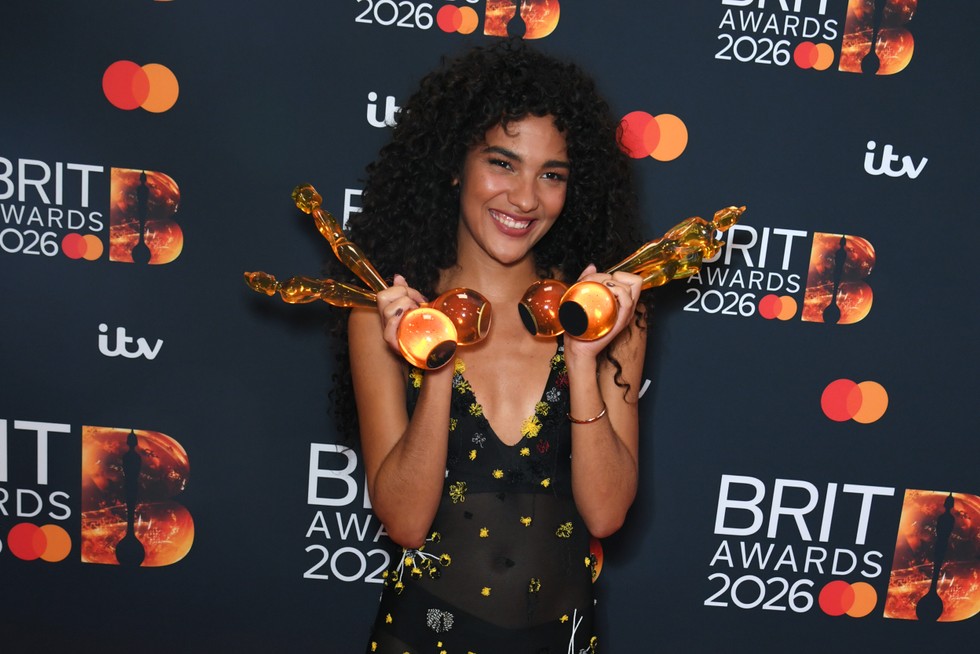
Let’s start where most people’s attention has been sitting: Olivia Dean.
If you caught the BRIT Awards in early 2026, you already know. Dean didn’t just win — she dominated in a way that felt almost inevitable in hindsight but still managed to surprise people in the room. Her album Messy, which had been building momentum since its release and subsequent deluxe edition, earned her Best Album, Best New Artist (a category some argued she’d already outgrown), and Best Pop Act. Three major trophies in a single night. The performance she gave — barefoot, loose, radiating a kind of unbothered joy that’s become her signature — was the clip that circulated everywhere the next morning.
What makes Dean’s ascent so compelling isn’t just her voice, which is genuinely exceptional, but the way she’s managed to bridge gaps that British pop has historically struggled with. She’s a Black woman making music that pulls from soul, jazz, and pop without ever feeling like it’s been designed by committee. Her songwriting is specific and personal without being niche. Tracks like “Dive” and “The Hardest Part” have this warmth to them — they sound like someone you’d actually want to sit with at a pub and talk to for three hours.
I think what she represents in 2026 is something the UK music industry has needed for a while: proof that you don’t have to choose between critical respect and genuine mainstream popularity. Adele did it, obviously. But Dean’s doing it with a very different energy — less dramatic, more understated, and honestly more relatable to a younger generation that’s tired of spectacle for its own sake.
Her influence is also spilling beyond music. Fashion brands have been circling her for months, and she’s become one of those rare artists whose personal style actually gets discussed on its own terms rather than through the lens of a stylist’s PR strategy. Keep watching this one. She’s not peaking. She’s building.
The Oasis Reunion: Still the Biggest Story in British Music
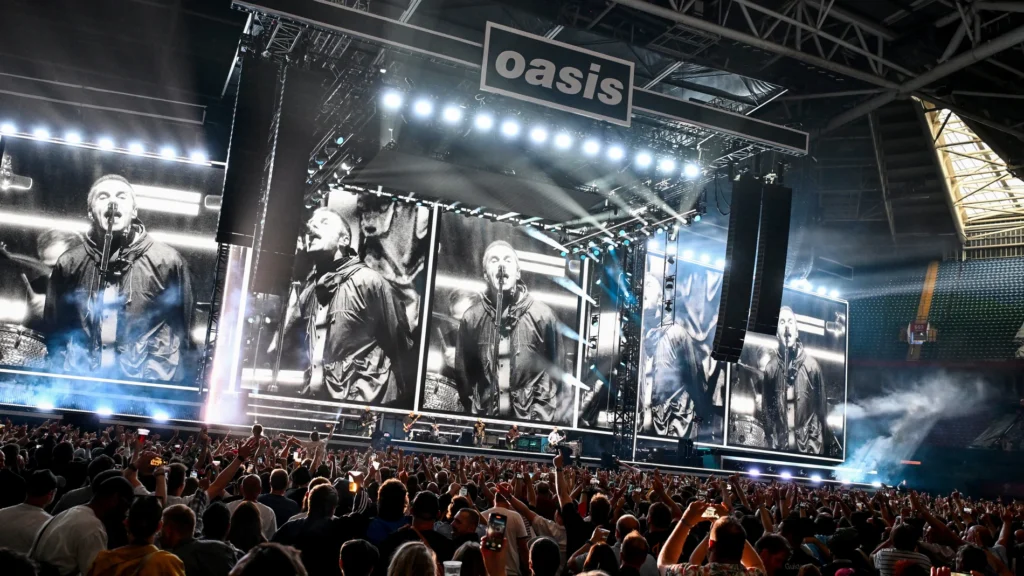
Now, let’s talk about the elephant — or rather, the two Gallagher-shaped elephants — in the room.
The Oasis reunion tour, which kicked off in the summer of 2025 and has extended well into 2026 with additional dates, remains arguably the single biggest entertainment story in the UK right now. And honestly, even as someone who’s been somewhat skeptical about nostalgia-driven reunions, I have to admit the scale of this thing is staggering.
For those who somehow missed the buildup: Liam and Noel Gallagher confirmed their reunion in late 2024 after years of public sniping that many assumed would never end. The announcement practically broke the internet in Britain. Ticket demand was so intense that it triggered genuine controversy around dynamic pricing on Ticketmaster, a debate that’s since led to regulatory discussions in Parliament. Millions of people tried to buy tickets. Most failed. The secondary market became a nightmare, and the cultural conversation shifted from “will they or won’t they” to “should ticketing even work this way.”
But beyond the logistics, the actual shows have been — by most accounts — remarkable. I spoke with a friend who attended the Manchester Heaton Park dates last summer, and his description was less about the music (which he said was strong, if imperfect) and more about the atmosphere. “It felt like the entire city had been waiting twenty years for permission to feel something together,” he told me. That line stuck with me because I think it captures why this reunion matters beyond just two brothers playing old songs.
In February 2026, the conversation has shifted to the international leg of the tour and persistent rumors about new material. Noel has been characteristically cryptic in interviews, neither confirming nor denying that new songs are in development. Liam, being Liam, has been more forthcoming on social media — dropping hints that feel deliberate even when they’re disguised as offhand remarks. Whether or not an album materializes, the reunion has already cemented itself as one of the defining cultural events of the mid-2020s in Britain.
What I find most interesting is the generational crossover. Yes, the core audience is Gen X and older millennials who grew up on Definitely Maybe and (What’s the Story) Morning Glory?. But there’s a genuine cohort of Gen Z fans who’ve discovered Oasis through streaming and TikTok, and for whom this tour is their first encounter with the band in a live context. That’s rare for a reunion — usually it’s pure nostalgia. This one has managed to recruit new believers.
Andrew Garfield: Britain’s Quiet Renaissance Man
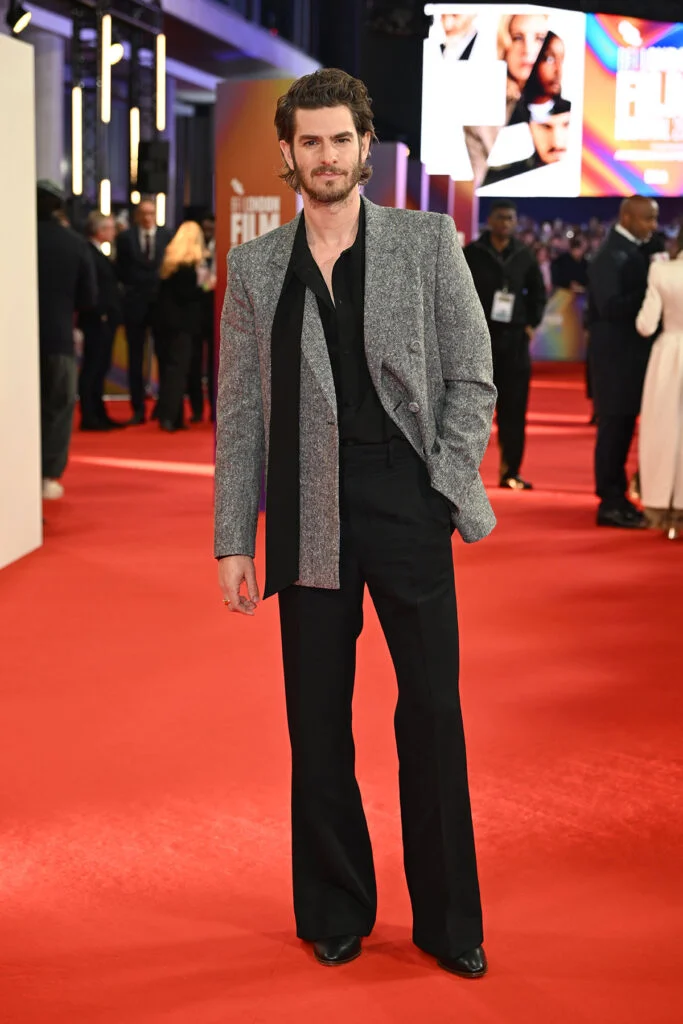
Slightly left of centre in the celebrity conversation but absolutely trending is Andrew Garfield. The London-born actor has been having what you might call a “second golden period” — not that his first one ever really ended, but 2025 and early 2026 have seen him reach a new level of cultural visibility.
His recent film work has been getting significant awards buzz, and his willingness to take on roles that are emotionally complex rather than commercially obvious continues to set him apart. But what’s really put Garfield into the 2026 trending conversation is his presence beyond film. He’s been doing more long-form interviews, appearing on podcasts, and speaking openly about grief, creativity, and masculinity in ways that resonate with audiences who are frankly tired of celebrities who only show up to promote products.
There’s a sincerity to Garfield that comes across whether you’re watching him in a press junket or reading a profile. He’s not performing authenticity — he’s just actually being open, which is rarer than it should be among actors at his level. In an era where British male celebrities often fall into either the “charming rogue” or “stoic professional” category, Garfield occupies a more emotionally literate space that people are clearly responding to.
Bukayo Saka: Football’s Brightest Light
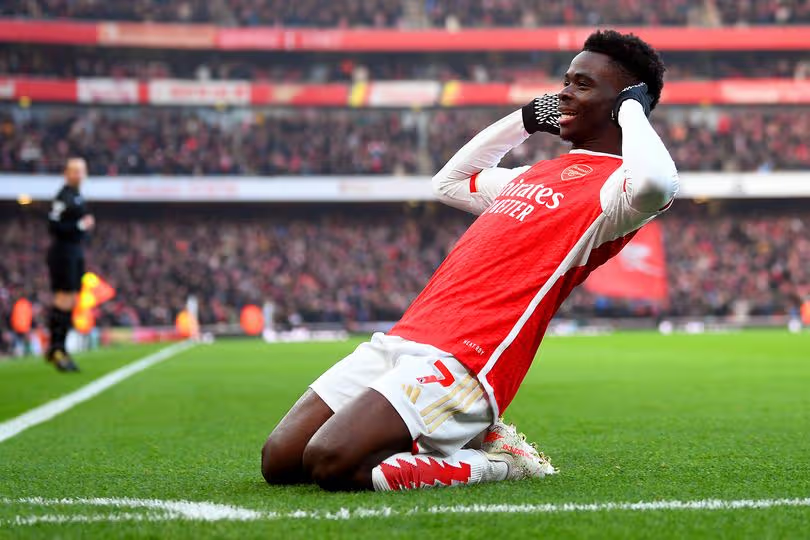
On the sporting side, it’s hard to overstate how much Bukayo Saka continues to trend in British culture. The Arsenal winger has long since moved past the “promising young talent” phase and is now firmly established as one of the best players in world football — and crucially, one of the most beloved athletes in the country.
What makes Saka’s celebrity interesting in 2026 is how he handles it. There’s no controversy, no drama, no carefully constructed bad-boy persona. He just plays extraordinary football and comes across as a genuinely decent person. In a sports media landscape that often rewards provocation, Saka’s consistency — both on the pitch and in his public conduct — has made him something of a national treasure. After the racist abuse he faced following the Euro 2021 penalty miss, his trajectory has felt like a kind of collective redemption story for English football fans who wanted to see him succeed not just as a player but as a person.
His commercial appeal has exploded accordingly. Brand partnerships, magazine covers, and a growing social media presence that manages to be engaging without feeling overly curated — Saka is the prototype for what a modern British sports celebrity looks like. And with major tournaments on the horizon, his visibility is only going to increase.
Carey Mulligan and the Prestige TV Shift
Carey Mulligan deserves mention here because her trajectory in 2025-2026 illustrates a broader shift among UK celebrities: the move toward prestige television as a primary vehicle for cultural relevance.
Mulligan, already an Oscar-nominated film actress with serious credentials, has leaned into television projects that have generated enormous buzz. This isn’t the old stigma of “film actors doing TV because they can’t get movie roles.” This is strategic, deliberate engagement with a medium that now reaches far more people than most theatrical releases. And it’s working. Her performances have been generating the kind of water-cooler conversation that even the biggest films struggle to achieve these days.
She’s part of a broader wave of established British actors — alongside people like Josh O’Connor and Jodie Comer — who are treating television not as a stepping stone but as a destination. For UK celebrity culture, this matters because it changes who gets talked about and how. The conversation is shifting from red carpets and blockbusters to nuanced performances in serialized stories, and actors like Mulligan are leading that charge.
Stormzy: The Evolution Continues
Stormzy remains a fixture in any honest accounting of UK celebrity culture, though his presence in 2026 is more multifaceted than it was during his chart-topping peak. He’s increasingly visible as a cultural figure, entrepreneur, and philanthropist — someone whose influence extends well beyond music.
His Merky Foundation continues to fund Black students through university, his publishing imprint has launched several notable authors, and his occasional social media commentary still carries genuine weight in British public discourse. Musically, there’s been speculation about new material, and any release from Stormzy in 2026 would immediately command attention. But what’s notable is that he doesn’t need a new album to stay relevant. He’s built something more durable than a discography — he’s built a platform.
This kind of celebrity evolution is relatively rare in British culture, where musicians are often expected to stay in their lane. Stormzy has refused to do that, and it’s kept him trending in a way that pure musicians, however talented, often can’t sustain.
The Broader Picture: What UK Celebrity Culture Looks Like in 2026

Stepping back from individual names, what does this landscape tell us?
First, authenticity is winning. The celebrities trending hardest right now — Dean, Saka, Garfield — aren’t doing so because of scandal or strategic controversy. They’re visible because people find them genuinely compelling as human beings. That’s a shift from even five years ago, when the attention economy rewarded provocation above almost everything else.
Second, nostalgia and newness aren’t in competition anymore. The Oasis reunion and Olivia Dean’s BRIT sweep happened in the same cultural moment, and neither diminished the other. British audiences seem capable of holding space for both — celebrating legacy while actively investing in new voices. That’s healthier than it sounds, because cultural ecosystems that tilt too far in either direction tend to stagnate.
Third, the definition of celebrity itself continues to broaden. Being a “trending UK celebrity” in 2026 doesn’t necessarily mean you’re on a reality show or posting daily on Instagram. It might mean you’re running a foundation, producing television, launching a publishing imprint, or simply being extraordinarily good at your craft in a way that people can’t ignore. The pathways to relevance are more diverse than they’ve ever been.
Finally — and this feels important to acknowledge — the UK celebrity landscape in 2026 is more racially diverse than at any point in its history. Dean, Saka, Stormzy, and others aren’t tokens or exceptions anymore. They’re central figures, and their centrality feels unremarkable in the best possible way. There’s still work to be done, obviously. Representation behind the scenes — in management, production, and ownership — still lags behind what we see on stage and screen. But the direction of travel is positive, and pretending otherwise would be dishonest.
Looking Ahead
We’re only in February. The rest of 2026 will undoubtedly surface new names, unexpected comebacks, and the occasional scandal that reorders the conversation entirely. That’s how celebrity culture works — it’s a living thing, responsive to events nobody can predict.
But the names in this piece aren’t going anywhere. Olivia Dean will tour behind her BRIT success. The Gallaghers will continue to sell out stadiums and generate headlines. Saka will keep thrilling football fans. Garfield will keep choosing interesting work. And the broader culture will keep evolving in ways that reward substance over noise — at least, that’s the trend I’m seeing.
Whether that holds for the rest of the year is anyone’s guess. But right now, in this moment, British celebrity culture feels like it’s in a genuinely interesting place. And that’s worth paying attention to.