
It happened somewhere between the announcement of the 14th vinyl variant for her latest retrospective collection and the third week of headlines regarding her newest real estate acquisition in the Swiss Alps.
I was scrolling through X (formerly Twitter) one Tuesday morning, and instead of the usual wall of adoration—fancams, lyric dissections, and “Mother is mothering” declarations—I saw something else. I saw exhaustion. And not just from casual listeners, but from people who had “1989” in their bios.
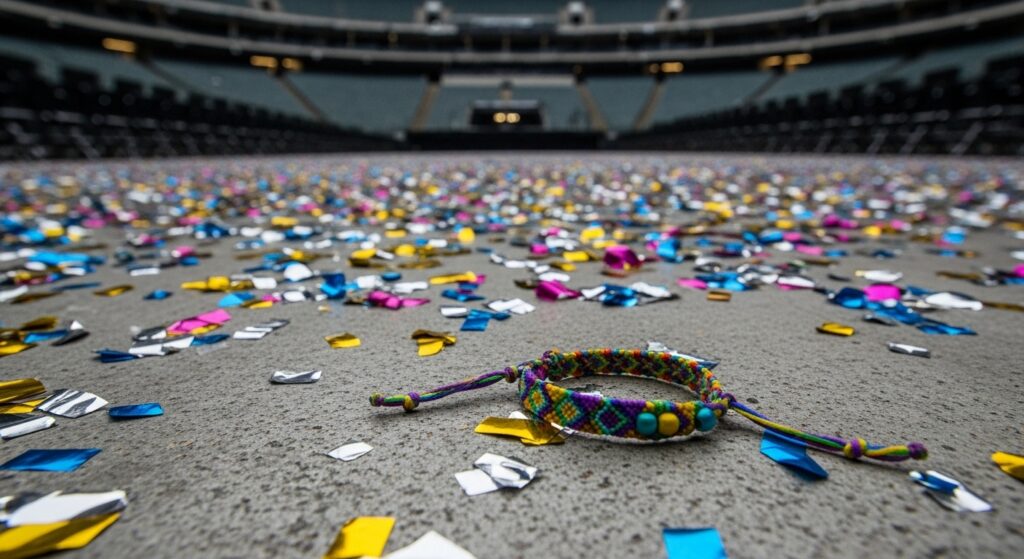
Welcome to 2026. The Eras Tour has finally wrapped its historic, multi-year conquest. The confetti has been swept up. And in the quiet aftermath of the loudest cultural event of the decade, a new, booming subculture has emerged from the shadows. They aren’t haters in the traditional sense, and they certainly aren’t the misogynistic trolls of 2012.
They are the “Anti-Swifties.” And ironically, many of them used to be her biggest fans.
As a cultural commentator who has covered the music industry’s shifting tides for over a decade, I’ve watched fandoms rise and fall. But what is happening with the Taylor Swift “snark” communities right now is unprecedented. It is a masterclass in overexposure, the limits of parasocial love, and the ethical fatigue of late-stage capitalism.
Here is why the internet’s safest space for Swifties has fractured into a thousand shards of critique.
The Hangover After the High
To understand the Anti-Swiftie, you need to examine the timeline. From 2023 to 2025, Taylor Swift wasn’t just a pop star; she was the atmosphere. You couldn’t watch a football game, buy a movie ticket, scroll Instagram, or read the Wall Street Journal without encountering her. She was the monoculture in an era where the monoculture was supposed to be dead.
But physics dictates that for every action, there is an equal and opposite reaction.
“I didn’t stop loving the music,” says ‘Sarah’ (not her real name), a moderator of one of the fastest-growing Swift-critical subreddits, which has tripled in size since late 2025. “I just stopped being able to defend the machine.”
Sarah represents a key demographic in these snark communities: The Fallen Fan. She’s 29, owns original merchandise, and has seen Swift live three times. But somewhere along the line, the shiny veneer cracked.
“It was the billionaire status for me,” Sarah explains. “When the news hit that she officially crossed the billion-dollar mark, the lyrics about being an underdog or a victim of the industry just stopped landing. You can’t be the boldest capitalist in America and also the relatable girl next door. We needed a place to talk about that cognitive dissonance without getting attacked by the stans.”
The Three Pillars of Snark
If you dive into the deep end of TikTok criticism or browse the “neutral” discussion boards that have turned sour, the content isn’t mindless hate. It’s actually surprisingly academic. In 2026, the criticism generally coalesces around three distinct pillars:
- The Carbon Footprint Discourse
Years ago, the “private jet” narrative was a meme. Now, in the climate-conscious landscape of 2026, it’s a moral line in the sand. Snark communities tirelessly track flight paths and CO2 emissions, contrasting them with the singer’s public image. It’s become a symbol of the “rules for thee, but not for me” attitude that younger Gen Z and Gen Alpha find increasingly unforgivable. - Variant Fatigue (The Cash Grab)
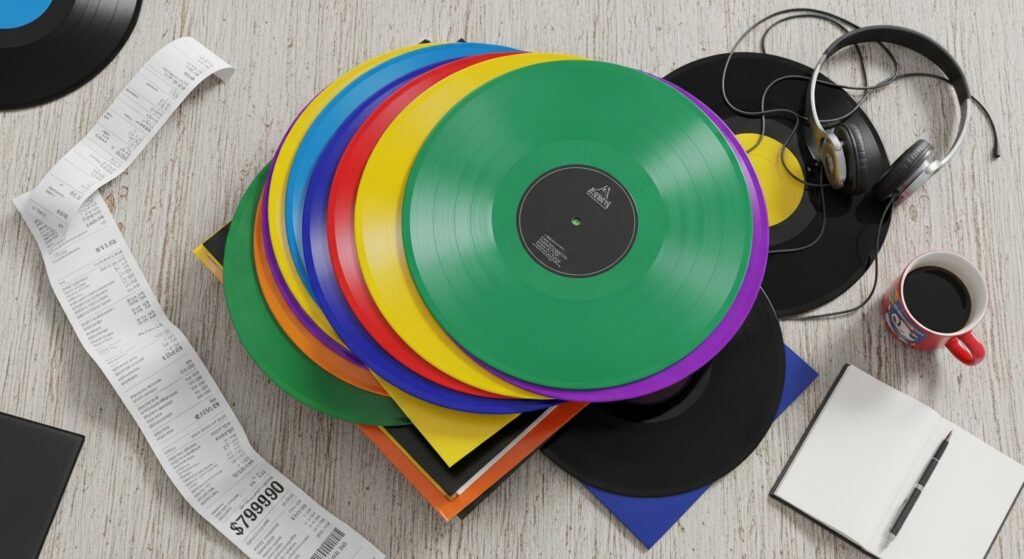
There is a specific thread I tracked on a forum recently titled “The Completist’s Nightmare.” It detailed the cost of collecting every color variant of Swift’s last two albums. The total ran over $600.
In an economy where rent prices are skyrocketing and inflation is persistent, the aggressive marketing tactics—limited-time digital downloads, four different covers to make a clock, and “exclusive” voice memos—have shifted from feeling like fun collectibles to feeling predatory. The snark communities are arguably the only places where fans can say, “This feels greedy,” without being told they aren’t “real fans.” - The “Eternal High School” Narrative
This is the most subjective, yet perhaps the most damaging critique. As Swift moves deeper into her 30s, a vocal segment of critics argues that her songwriting narrative hasn’t matured with her.
“It’s the refusal to be the villain in her own story,” writes one popular Substack critic who focuses on pop culture optics. “Snark communities are exploding because people are tired of the narrative where she is always the one thing that happens to her, rather than an agent of her own chaos. People crave accountability, and they aren’t getting it from the music, so they’re creating it in the forums.”
The Radicalization of the Moderate
So, why are these communities growing now? Why 2026?
The answer lies in the toxicity of the core fandom—the “Stan.”
For years, the Swiftie ecosystem operated on a “with us or against us” binary. If you tweeted that you didn’t like a dress she wore to an awards show, you might face a barrage of doxxing threats. If you suggested a lyric was clunky, you were labeled a misogynist.
This policing of thought created a pressure cooker. Moderate fans—people who liked the songs but had questions about the business practices—were pushed out of mainstream fan spaces. They were refugees seeking asylum.
They found it in “Snark” groups.
I spoke with a digital sociologist, Dr. Aris Thorne, who specializes in online tribalism. He believes this was inevitable. “When a fandom requires total ideological purity, it eventually cannibalizes itself,” Thorne told me. “The moderate fans get pushed into the arms of the haters. Eventually, those moderates adopt the language of the haters because that’s the only group that accepted them. It’s a radicalization pipeline.”
The “Bitch Eating Crackers” Syndrome
There is a psychological phenomenon often cited in these groups known as “BEC” (Bitch Eating Crackers). It stems from a meme: “When you dislike someone so much that anything they do annoys you. Look at that bitch eating crackers like she owns the place.”
In 2026, Swift had reached BEC levels for a significant portion of the pop-culture-consuming public. Because she has been everywhere for so long, the charm has worn off, revealing the mechanics of the performance.
In these snark hubs, every paparazzi walk is dissected as a PR stunt. Every relationship update is analyzed as a strategic business merger. Is it cynical? Absolutely. Is it sometimes a reach? Yes. But it’s also a reaction to a decade of being told that everything Swift does is accidental or fateful, rather than calculated.
The “Anti-Swiftie” is simply someone who has decided to look at the magician’s hands rather than the rabbit.
The Death of the “Girls’ Girl” Myth
Perhaps the most painful realization for the Fallen Fans I’ve interviewed is the erosion of the feminist icon status.
In 2026, intersectionality is the baseline requirement for cultural icons. Snark communities are quick to point out silence on social issues, the company she keeps, and the selective nature of her feminism.
“We grew up,” says Sarah, the subreddit moderator. “We started paying bills, seeing the climate crisis worsen, and watching the wealth gap widen. And suddenly, cheering for a billionaire to win another trophy felt… hollow. The snark community isn’t just about being mean. It’s about deprogramming ourselves from the cult of personality.”
What This Means for the Future of Fame
The explosion of Taylor Swift snark communities in 2026 isn’t really about Taylor Swift. It’s about the death of the untouchable superstar.
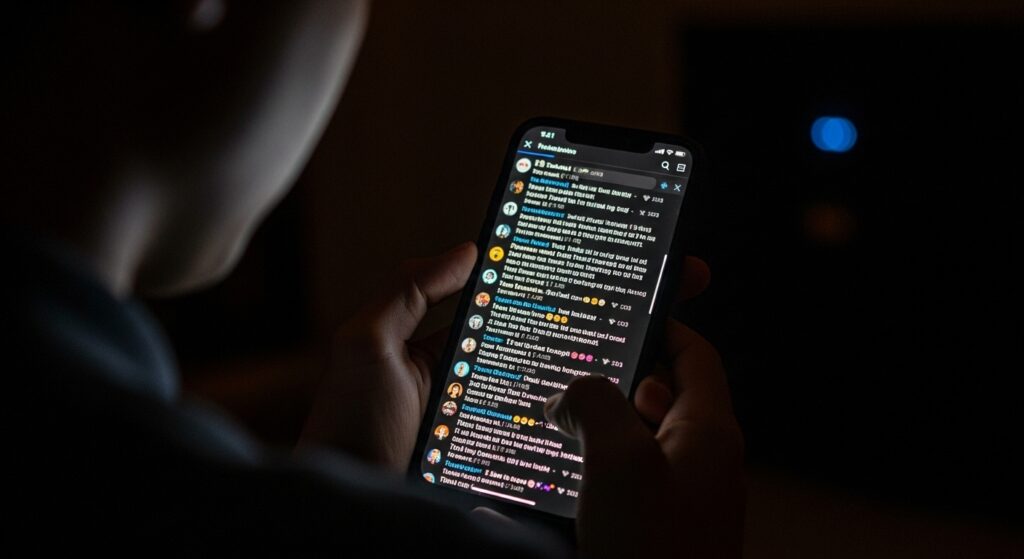
We are entering an era where audiences possess a media literacy that makes the old tricks of PR ineffective. We know how the charts are manipulated. We know what paparazzi are called. We know what greenwashing looks like.
Swift is merely the biggest target because she is the biggest star. But she is also the canary in the coal mine. The blind worship of celebrities is dying. In its place, we have a skeptical, analytical, and sometimes cynical audience that demands not just bops but ethical consistency.
The “Anti-Swiftie” isn’t going away. In fact, as long as the machine keeps churning, the resistance will keep growing. For the first time in her career, Taylor Swift is facing a critic she can’t write a break-up song about: her own disillusioned fanbase.