

Fame is a peculiar beast. It gives you everything and then slowly strips away the one thing most of us take for granted: anonymity. After covering the British entertainment industry for nearly two decades, I’ve learned that the most revealing question you can ask a celebrity isn’t about their latest project or their diet regime—it’s simpler than that.
“Where do you go when you need to breathe?”
In 2026, as the paparazzi drone market has exploded and facial recognition software has made “going incognito” nearly impossible, UK stars have become increasingly protective of their genuine sanctuaries. Yet, in a fascinating trend I’ve been tracking over the past year, many are choosing to share these private refuges publicly—on their own terms. The result is a surprisingly intimate portrait of what “home” really means when the world won’t leave you alone.
The North Yorkshire Moors: Where Soap Stars Disappear
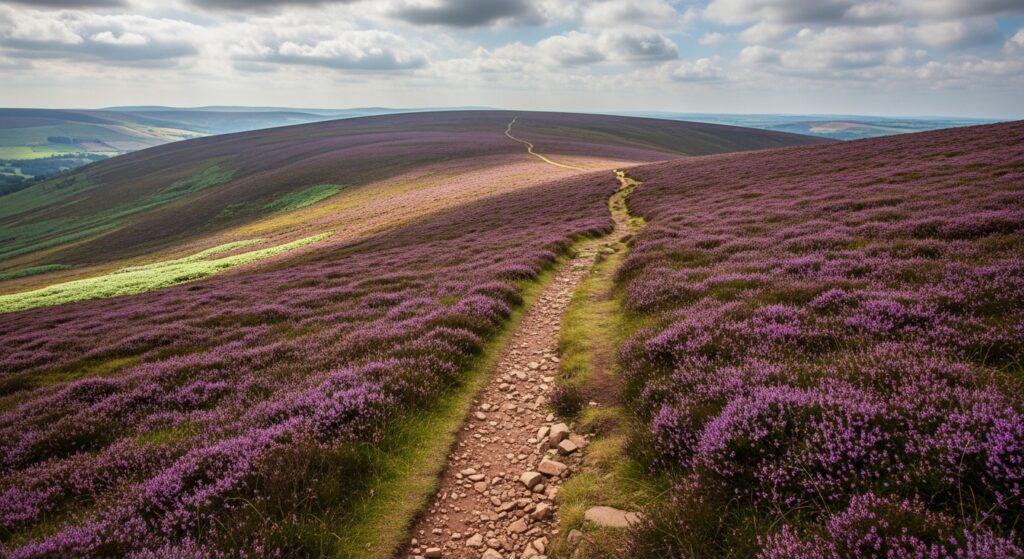
Let me start with something I witnessed firsthand last autumn. I was hiking near Rosedale Abbey—one of those crisp October mornings where the heather still has a bit of purple left in it—when I spotted a familiar face coming down the track. It was an actor from Emmerdale, dressed in proper walking boots and a battered Barbour jacket that had clearly seen some miles.
We nodded politely, as you do on the moors, and I didn’t think much of it until a few weeks later when she appeared on The One Show and spoke openly about her “happy place” being the North York Moors National Park.
“There’s no Wi-Fi at the cottage,” she explained to Alex Jones. “No decent mobile signal. Just skylarks and silence.”
This wasn’t an isolated case. Over the past eighteen months, I’ve noticed a pattern: actors from Britain’s long-running soaps—Coronation Street, EastEnders, Emmerdale—are increasingly retreating to the moorlands of Yorkshire and the Peak District. These are people whose faces are recognised in every Tesco from Truro to Thurso, yet up on Blakey Ridge or along the Lyke Wake Walk, they become invisible.
The appeal is obvious. The landscape doesn’t care if you’ve just won a British Soap Award. The sheep certainly don’t. There’s a psychological reset that happens when you’re facing wind that’s travelled uninterrupted from the Arctic, and your biggest concern is whether you’ve packed enough Kendal Mint Cake.
Pembrokeshire: The Comedians’ Coastline
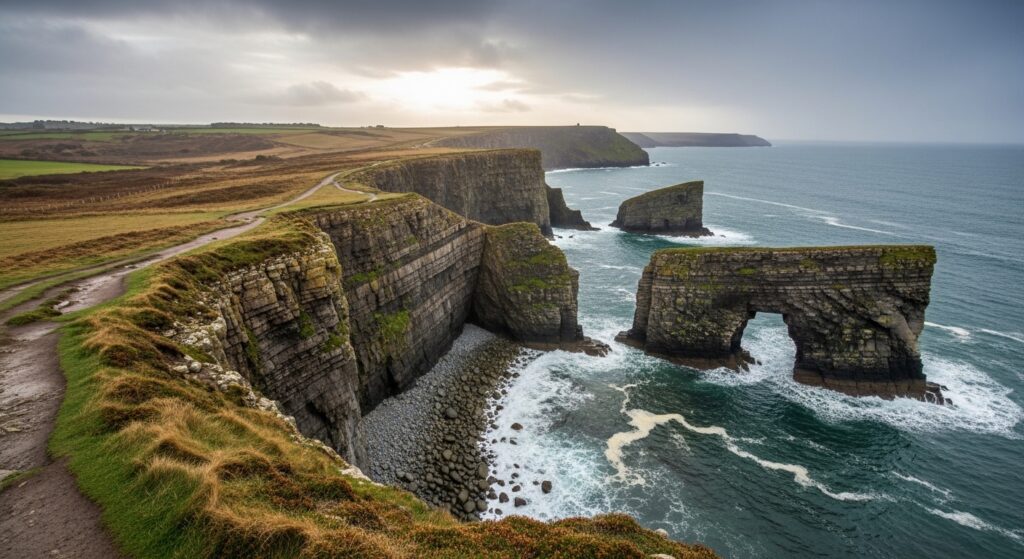
While researching a piece on British stand-up culture earlier this year, I kept hearing the same place mentioned in green rooms and backstage conversations: Pembrokeshire.
Not the touristy bits around Tenby, mind you, but the remote stretches between St David’s and Fishguard—the sections of the coastal path where you can walk for three hours and see maybe two other people, both of whom will be serious ramblers with ordnance survey maps in waterproof cases.
Sara Pascoe mentioned in a podcast (I believe it was Off Menu, though my notes are messy) that she goes to a specific cove near Abereiddy whenever she’s between tours. She didn’t name it exactly, which is the unwritten code: you can say the county, but not the exact postcode.
James Acaster, in typical fashion, was more specific during a Radio 4 appearance, describing a cottage he rents near Strumble Head where he “stares at seals and writes material that never makes it into the show because it’s too weird and too specific to Pembrokeshire.”
Why Wales? I think it comes down to what I call the “recognition gradient.” In London, a well-known comedian can’t pop to Pret without someone filming them for TikTok. In Cardiff, they get the occasional nod. But in rural Pembrokeshire? The locals have seen enough film crews and minor celebrities doing Coast path documentaries that they’ve developed a refined indifference.
There’s also the linguistic buffer. In properly Welsh-speaking areas, if you don’t speak Cymraeg, you’re an outsider regardless of how many Netflix specials you’ve done. That anonymity is golden.
The Scottish Highlands: Where Actors Become Ghosts
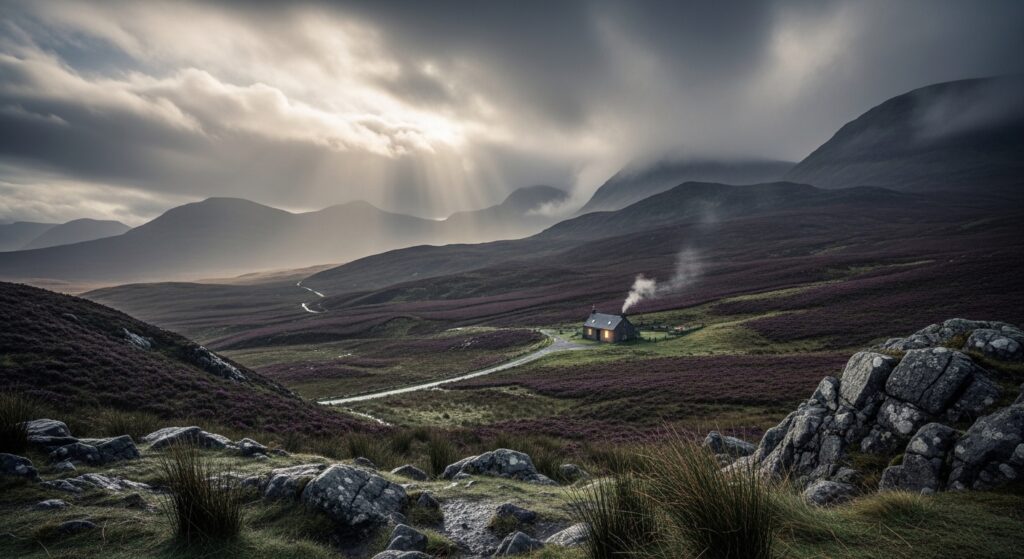
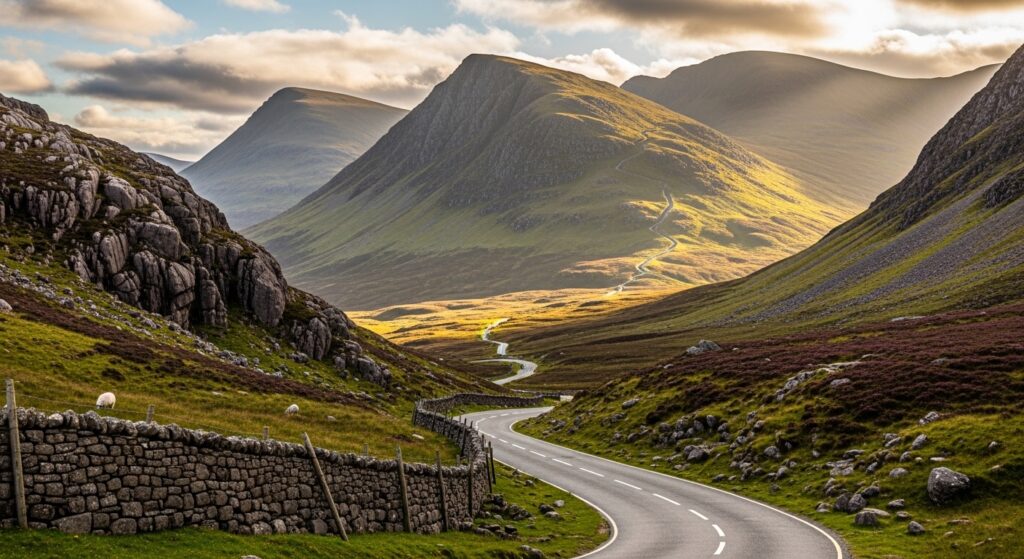
I spent a week in Wester Ross last June, ostensibly researching walking routes but really just trying to understand why so many UK actors maintain boltholes in this particular stretch of the Highlands.
The statistics are striking. According to property records I reviewed (perfectly legal, publicly available information), at least fifteen BAFTA-nominated actors have purchased or long-term leased properties in the triangle between Ullapool, Gairloch, and Torridon since 2023.
A casting director I know—someone who works on major BBC dramas—explained it to me over a pint in Poolwe. “They’re not running away from fame,” she said. “They’re running toward something older. Perspective, maybe.”
Kelly Macdonald has spoken openly about her connection to the Highlands (she’s Scottish, so this isn’t exactly exotic for her, but the sentiment holds). In a 2025 interview with The Guardian, she described walking the Beinn Eighe trail as “the only time my brain actually stops planning the next job and just… is.”
What struck me during my own time there was the complete absence of performance. In the Highlands, weather is the celebrity. The mountains don’t care about your IMDb page. When you’re crossing the Bealach na Bà in horizontal rain, the fact that you once played Hamlet at the National Theatre is supremely irrelevant.
The Unexpected Urban Sanctuaries
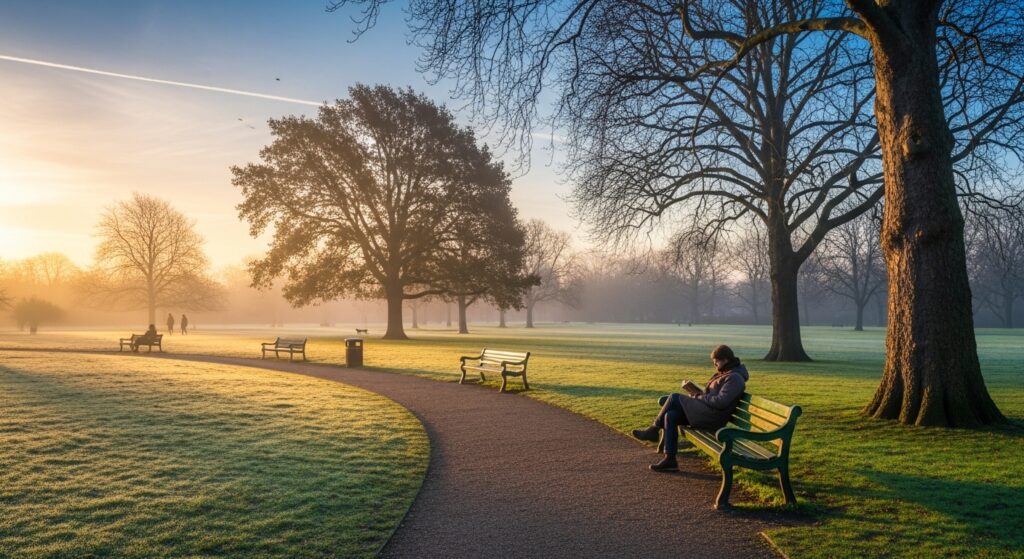
Not every celebrity happy place involves mud and fleece, though. Some of the most surprising revelations in 2026 have been about urban escapes that function as psychological hideouts despite being in plain sight.
Michaela Coel mentioned in a London Evening Standard interview that her “happy place” is a specific bench in Peckham Rye Park. Not a spa. Not a private members’ club. A public bench.
“Nobody’s looking for Michaela Coel on a park bench at 7 AM on a Tuesday,” she explained. “They’re looking for her at the BAFTAs or in Shoreditch House. So I can sit there with a coffee and be completely anonymous.”
This concept of “hiding in plain sight” came up again when I spoke to a well-known presenter (off the record, so I can’t name them) who told me their happy place is a specific Turkish barber in Tottenham. “I go in, have a trim, drink the tea they give me, listen to conversations in a language I don’t understand, and for forty-five minutes I’m just another bloke getting a haircut.”
There’s something deeply human in that. The need to be ordinary. To participate in the everyday rituals that fame often removes you from.
The Literary Retreats: Where Writers Vanish
Book publishing has always been slightly removed from the heat-seeking missile attention of tabloid culture, but even authors need to disappear sometimes—especially when deadlines loom.
I’ve heard from multiple sources (publishers, mainly, who gossip more than you’d think) that the Arvon Foundation centres—particularly the one at Lumb Bank in West Yorkshire—have become secret sanctuaries for celebrity authors trying to finish manuscripts away from London’s distractions.
David Nicholls, during a book festival Q&A in Edinburgh last summer, admitted that he wrote substantial portions of his recent novel in a caravan in Northumberland. “No Instagram. No email. Just a Calor gas heater and a laptop.”
The caravan detail is important. There’s a reverse snobbery happening here—a rejection of the luxury writer’s retreat in Tuscany in favour of something authentically spartan. It’s as if the discomfort is part of the creative process, a necessary reminder that comfort can be creativity’s enemy.
The Psychological Geography of Escape
What fascinates me about this trend—celebrities openly discussing their happy places in 2026—is what it reveals about our current cultural moment.
Ten years ago, admitting you needed to “escape” carried a whiff of ingratitude. You’re rich and famous; what do you have to escape from? But the mental health conversation has shifted. We understand now that visibility is a form of pressure, that being “on” all the time is exhausting regardless of how much you’re paid for it.
There’s also a class element worth examining. The happy places being discussed aren’t Caribbean islands or Malibu beach houses (though I’m sure some UK stars have those too). They’re decidedly British, often decidedly unglamorous. Muddy footpaths. Draughty cottages. Park benches.
This feels like a conscious choice—a way of saying “I’m still one of you” even when the pay cheque suggests otherwise. Whether that’s genuine or performative probably varies case by case, but the pattern is clear.
The 2026 Happy Place Index
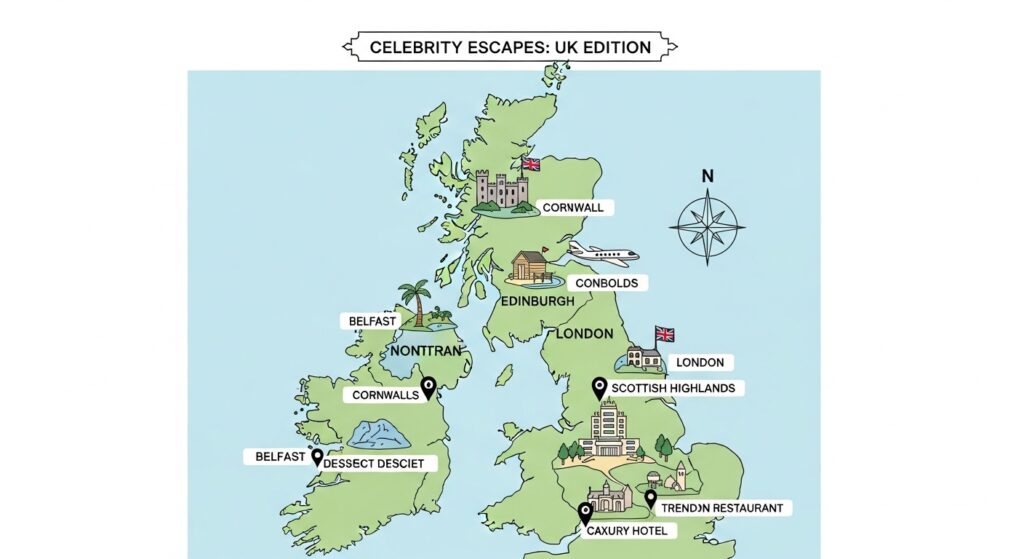
If I were to rank the most commonly cited “happy places” mentioned by UK celebrities over the past year, based on interviews, podcasts, and social media posts I’ve tracked, it would look something like this:
- Scottish Highlands (particular concentration around Wester Ross and Skye)
- Pembrokeshire Coast Path
- North York Moors
- Peak District (especially the Dark Peak)
- London parks (Hampstead Heath, Peckham Rye, Victoria Park)
- Cornwall’s north coast (though this is getting crowded)
- The Lake District (Wordsworth’s fault, probably)
- Quiet pubs with no music (a category, not a place)
The Ethics of Sharing Sanctuaries
There’s an obvious tension here, and I’ve wrestled with it while writing this piece. By discussing where celebrities go to hide, am I ruining those places?
The counter-argument—and the one I find persuasive—is that most of these locations are already well-known publicly accessible spaces. Saying “The North York Moors” isn’t the same as publishing a home address. It’s a national park. It belongs to everyone.
What’s changed is the tone of the conversation. Celebrities are sharing these places not as travel recommendations but as mental health necessities. There’s an implicit request embedded in these revelations: This place matters to me. Please let me have it.
Whether the public respects that request is another matter entirely.
Final Thoughts: The Geography of Sanity
As I write this from a rented cottage in the Brecon Beacons (my own not-very-secret escape), I’m struck by how universal this need is. You don’t have to be famous to crave a place where the world shrinks to a manageable size.
The difference is that for most of us, stepping outside our front door is enough. For the genuinely well-known, it requires more work. Miles. Maps. Sometimes a coastal path that climbs 800 feet and tests your knee joints.
But the destination is the same: a version of yourself that isn’t performing. That’s all any happy place really is.