

A deep dive into one of Taylor Swift’s most underappreciated tracks — its origins, emotional layers, and why it still resonates with fans a decade later.

I remember the first time “This Love” really hit me. It wasn’t when 1989 dropped back in October 2014. Honestly, I barely noticed it on that initial listen. I was too busy replaying “Blank Space” and “Style” like everyone else. It was months later, driving home late one night with the album on shuffle, that the song crept in through my speakers and absolutely floored me. There’s something about the quiet ones on a Taylor Swift album — they tend to sneak up on you when you’re not expecting it.
And that’s kind of the whole point of “This Love.”
The Quiet Track That Almost Nobody Talked About
When 1989 was released, the conversation was dominated by its lead singles. “Shake It Off” was everywhere. “Bad Blood” sparked endless celebrity feud speculation. “Blank Space” became a cultural moment. Meanwhile, track 9 — “This Love” — sat patiently in the background, waiting for its audience.
It wasn’t a single. It didn’t get a flashy music video upon release. There was no dramatic storyline attached to it in the press. But if you ask devoted Swifties which 1989 tracks they hold closest to their hearts, “This Love” consistently makes the list. There’s a reason for that, and it goes well beyond the pretty melody.
The song deals with something most pop music avoids: the slow, painful process of letting go — and the unexpected grace of something returning to you when you’ve finally stopped chasing it. It’s not dramatic. It’s not angry. It’s almost meditative, which made it a strange fit for a pop album in 2014 but a timeless one in hindsight.
The Backstory: Where “This Love” Came From

Taylor Swift wrote “This Love” on her own, which is worth noting because much of 1989 was co-written with producers Max Martin, Shellback, and Jack Antonoff. This one? Just her. She’s spoken in interviews about writing it late at night, almost as a journal entry set to music. That solitary creative process shows in the final product — it feels intimate in a way that collaborative pop songwriting rarely achieves.
The song reportedly draws from her personal experience with an on-again, off-again relationship. While Swift has never explicitly confirmed which relationship inspired it (and frankly, the guessing game has always felt a bit reductive), the emotional blueprint is unmistakable. Anyone who’s been through the cycle of loving someone, losing them, and then finding your way back to each other — or at least to peace about the situation — will recognize what she’s describing.
What makes the writing exceptional is the extended metaphor she builds throughout. She compares love to the tide: it comes in, it pulls away, it seems gone forever, and then it returns. It’s not a groundbreaking metaphor on paper. Poets have compared love to the ocean for centuries. But Swift grounds it in such specific emotional detail that it feels completely fresh.
Breaking Down the Lyrics: What She’s Really Saying
Let’s walk through this, because the lyrics deserve more attention than they typically get.
The song opens with an image of quiet devastation. She’s describing the aftermath of a relationship’s end — the silence, the absence, the way someone’s departure leaves a physical impression on your life. “In losing grip, on sinking ships, you showed up just in time.” There’s this acknowledgment that she was drowning, metaphorically, and the return of this love (or this person) served as a rescue she didn’t know she needed.
The chorus is where the ocean metaphor takes center stage:
“This love is good, this love is bad, this love is alive back from the dead. These hands had to let it go free, and this love came back to me.”
What strikes me every time I hear this is the simplicity. She’s not trying to be clever. She’s being honest. Love that you’ve lost and mourned and buried can still come back. But — and this is the crucial part — it only comes back after you’ve genuinely let it go. Not the performative letting go where you pretend you’re fine while refreshing their Instagram at 2 AM. The real kind. The kind where your hands physically unclenched and you walked away.
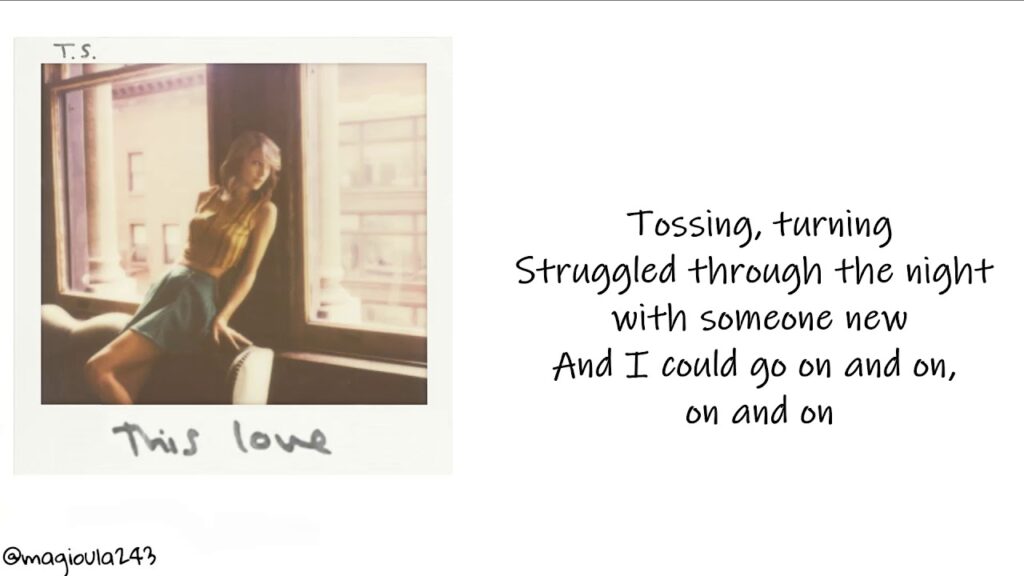
The second verse deepens the water imagery. “Tossing, turning, struggled through the night with someone new.” This line is devastating in its casualness. She tried to move on. She was with someone else. But the ghost of the old love was still there, disrupting even her attempts at starting fresh. Anyone who’s been in this position knows exactly how that feels — lying next to someone perfectly good while your mind is somewhere else entirely.
The bridge is perhaps the most beautiful part of the song: “Your kiss, my cheek, I watched you leave. Your smile, my ghost, I fell to my knees.” The imagery is cinematic but restrained. She’s replaying a goodbye scene in her memory, and the physical response — falling to her knees — tells you everything about the emotional weight of that moment.
The Sonic Landscape: Why 1989 Needed This Track
1989 was Taylor Swift’s definitive break from country music. She’s said repeatedly that she wanted to make a “blatant pop album,” and she succeeded spectacularly. But what made the album great — not just commercially successful, but genuinely great — was its range.
“This Love” serves as a crucial breathing point on the tracklist. After the adrenaline of tracks like “Bad Blood” and the infectious energy of “How You Get the Girl,” this song asks you to slow down. The production is sparse by 1989 standards. Dreamy synths. Layered vocals that feel almost ghostly. A beat that pulses like a heartbeat rather than driving you to dance.
Swift and her production team created something that sits in an interesting space between ambient pop and singer-songwriter balladry. It wouldn’t sound out of place on a Bon Iver record if you swapped out the vocals. That atmospheric quality is what gives the song its staying power — it doesn’t sound dated the way some mid-2010s pop production does. Listening to it now, in early 2025, it could have been released yesterday.
Taylor’s Version: The Revival That Proved Its Worth
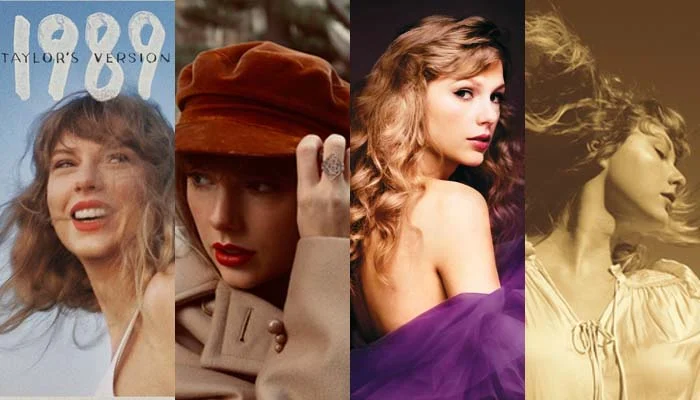
When 1989 (Taylor’s Version) arrived in October 2023, “This Love (Taylor’s Version)” had actually been out for over a year already. Swift released it as a single in May 2022, making it the first taste of the re-recorded album. That choice was deliberate and telling. Out of all the tracks on 1989, she chose the quiet one, the deep cut, the one that never got its commercial moment the first time around.
The re-recorded version brought something new to the table. Swift’s vocals in 2022 carried a maturity that the 2014 recording didn’t — and couldn’t — have. At 24, she sang about love returning with a kind of hopeful yearning. At 32, she sang the same words with the weight of someone who’d actually lived through that full cycle multiple times. The notes are the same. The understanding behind them is deeper.
The re-release also got a significant boost when it was featured in promotional material for the series The Summer I Turned Pretty on Amazon Prime Video. That placement introduced the song to an entirely new audience — younger listeners who were discovering 1989 through Taylor’s Version rather than the original. For many Gen Z fans, this was their entry point into the album, which is a fascinating reversal of the song’s original trajectory as a deep cut.
Why “This Love” Matters More Now Than It Did in 2014
Here’s what I find most interesting about this song’s legacy: it’s aged in the opposite direction from most pop music. Most pop songs peak at release and gradually fade from relevance. “This Love” has grown in cultural and emotional significance over time.
Part of that is the Eras Tour. When Swift embarked on her record-shattering tour in 2023 — a tour that continued into 2024 and whose cultural impact is still being felt in 2025 — the 1989 set became one of the most anticipated segments. And while “This Love” wasn’t always in the main setlist, it appeared in surprise acoustic sets and became one of the most requested songs on fan forums and social media. Its live performance stripped away even more production, leaving just Swift and the words, which is where the song is at its most powerful.
There’s also something about where we are culturally in 2025 that makes “This Love” resonate differently. We’ve collectively been through a lot — pandemic recovery, social upheaval, a general sense of things being lost and maybe coming back in new forms. The song’s central message — that some things have to be released before they can return — feels almost philosophical in the current moment. It’s not just about romantic love anymore. It applies to friendships, careers, places, identities, versions of ourselves we thought were gone.
The Song’s Place in Swift’s Larger Artistic Arc
If you zoom out and look at Taylor Swift’s discography as a continuous narrative — which is essentially what the Eras Tour invited us to do — “This Love” occupies a pivotal thematic position. It’s a bridge between the heartbreak storytelling of her earlier work and the more introspective, emotionally complex writing that would define folklore and evermore.
You can draw a direct line from “This Love” to tracks like “the lakes,” “seven,” and “long story short.” That willingness to sit in ambiguity, to acknowledge that love isn’t simply good or bad but often both simultaneously — that started showing up prominently on 1989, and “This Love” is its purest expression.
Swift has also talked in various interviews about how her relationship with her own catalog has changed through the re-recording process. Revisiting “This Love” nearly a decade after writing it gave her a new appreciation for what her younger self was processing. In a 2023 interview, she mentioned that some songs surprise her when she re-records them because she realizes she was writing about feelings she didn’t fully understand at the time. While she didn’t name “This Love” specifically, fans widely believe it’s one of the tracks she was referring to.
Companion Pieces: Songs That Pair With “This Love”
If “This Love” resonates with you, there are several tracks across Swift’s discography and beyond that explore similar emotional territory:
- “Clean” (1989): The album’s penultimate track deals with the aftermath of the same kind of loss, but from the perspective of having fully healed.
- “Cornelia Street” (Lover): Another song about the fear of losing love and the physical spaces that hold those memories.
- “illicit affairs” (folklore): Explores the painful side of complicated love with similar lyrical restraint.
- “The Archer” (Lover): Shares the same vulnerability and self-examination.
- Lana Del Rey’s “Love”: Not a Swift track, but occupies a similar sonic and emotional space — dreamy, melancholic, and quietly powerful.
What Trending Conversations Are Saying in 2026
As of early 2026, “This Love” continues to surface in online discussions, particularly around three themes. First, fans preparing for potential new Swift music are revisiting deep cuts and reassessing which songs were ahead of their time. Second, the ongoing conversation about Taylor’s Version recordings has people comparing original and re-recorded versions side by side, and “This Love” is frequently cited as one of the re-recordings that improved on the original. Third, there’s a growing trend on TikTok and social media of using “This Love” as a soundtrack for reunion stories — people reconnecting with old friends, returning to hometowns, or rediscovering old passions. The song has become shorthand for the concept of things coming full circle.
Frequently Asked Questions
What is “This Love” by Taylor Swift about?
“This Love” is about the experience of losing a romantic relationship, genuinely letting go, and then having that love unexpectedly return. Swift uses ocean and tide imagery throughout the song to represent love’s natural ebb and flow. It’s widely interpreted as being inspired by a real on-again, off-again relationship from her personal life.
Who wrote “This Love” from 1989?
Taylor Swift is the sole credited songwriter on “This Love,” making it one of the few tracks on 1989 that she wrote entirely by herself without co-writers like Max Martin or Jack Antonoff. She produced it alongside Nathan Chapman and later re-recorded it for 1989 (Taylor’s Version).
When was “This Love (Taylor’s Version)” released?
“This Love (Taylor’s Version)” was released on May 6, 2022, well ahead of the full 1989 (Taylor’s Version) album, which came out on October 27, 2023. It was the first re-recorded track from 1989 to be officially released.
Was “This Love” ever a single?
The original 2014 version was never released as an official single. However, “This Love (Taylor’s Version)” was released as a promotional single in 2022 and gained significant streaming numbers, partly due to its placement in The Summer I Turned Pretty on Amazon Prime Video.
Why do fans consider “This Love” underrated?
Because it was never a commercial single and didn’t receive a music video or significant radio play during the original 1989 era, many casual listeners overlooked it. Die-hard fans, however, have long championed it as one of the album’s emotional centerpieces and one of Swift’s best pieces of pure songwriting.
What movie or TV show featured “This Love”?
“This Love (Taylor’s Version)” was prominently featured in the trailer and promotional campaign for The Summer I Turned Pretty, the Amazon Prime Video series based on Jenny Han’s novel. This placement introduced the song to a massive new audience in 2022.
How does the re-recorded version differ from the original?
The re-recorded version features a slightly more mature vocal performance, reflecting Swift’s growth as a singer over the intervening years. The production is largely faithful to the original but has a slightly warmer, more polished sound. Many fans and critics have noted that Swift’s deeper understanding of the song’s themes comes through in the new vocal delivery.